AEO services: Get cited when buyers ask an AI
Litebox's AEO services help B2B software companies get cited when buyers ask an AI instead of typing a search, combining page structure, entity consistency, and citation audits shaped around how these engines actually pull an answer.
AI engines now answer questions that used to send a click to your site
An answer engine optimization agency exists because buyers ask ChatGPT or Google's AI Overview instead of searching. Our keyword research, updated in August 2026, found 71% of target queries already return an AI Overview. SEO ranks a page; AEO gets it quoted inside the answer, standing alone with a fact worth citing. Most AEO providers serve any industry; this one specializes in B2B software.
What's included: five deliverables that make a page citable
Deliverables
People searching for best answer engine optimization services are usually looking for one specific thing: proof a page can get quoted, not just structured to look like it might. This service covers five deliverables aimed at that: citation audits that check whether AI engines can currently find and quote the page, page structure work so each section stands alone for extraction, entity consistency across the site and any structured data, schema and llms.txt implementation, and continuous measurement once the site is live. Each deliverable maps to a specific reason a page gets skipped by an AI engine. It doesn't include content writing, paid promotion, or link building, which sit in growth's other tracks.
Citation snapshot
Page structure
Entity consistency
Schema implementation
Continuous measurement
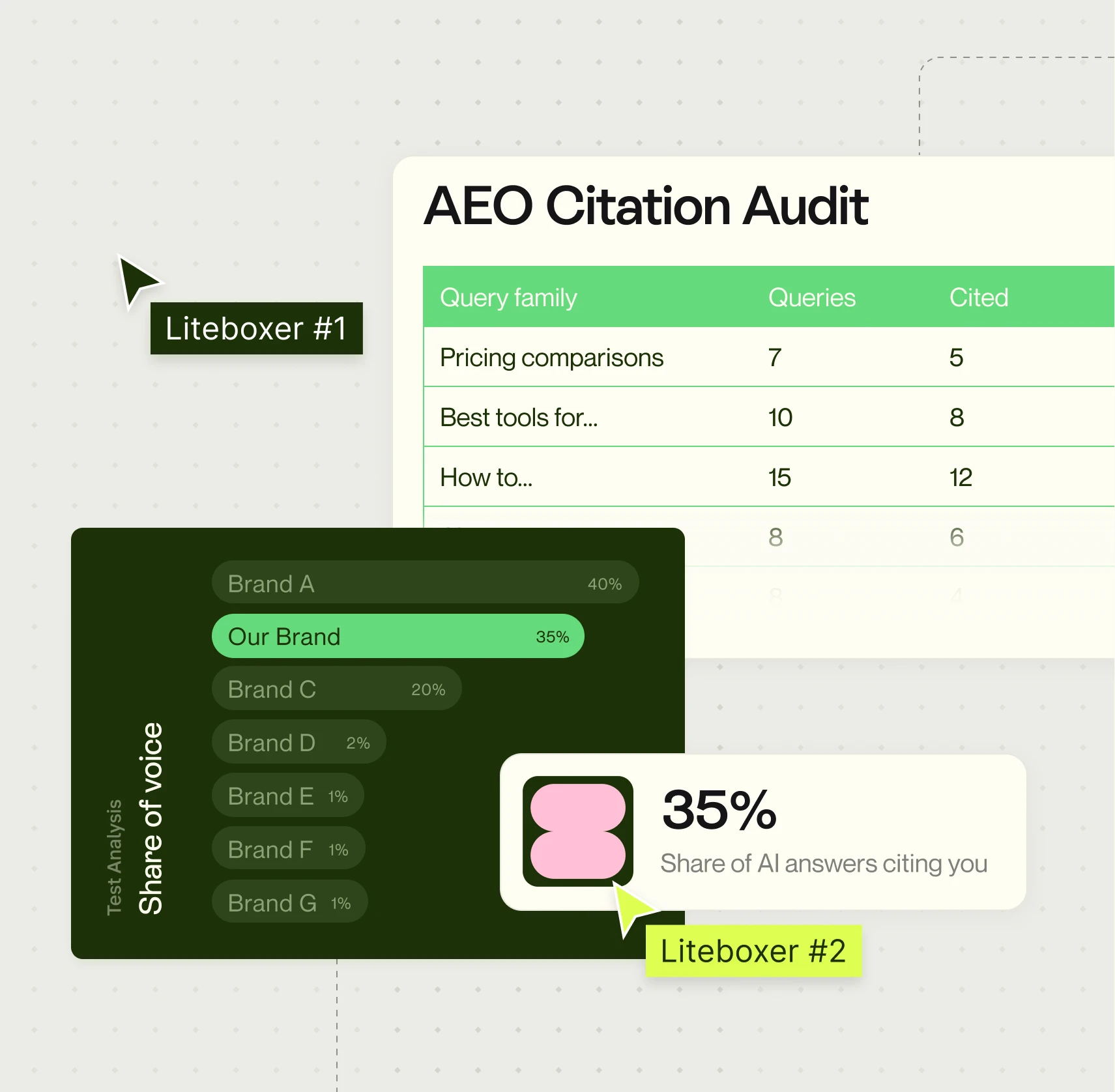
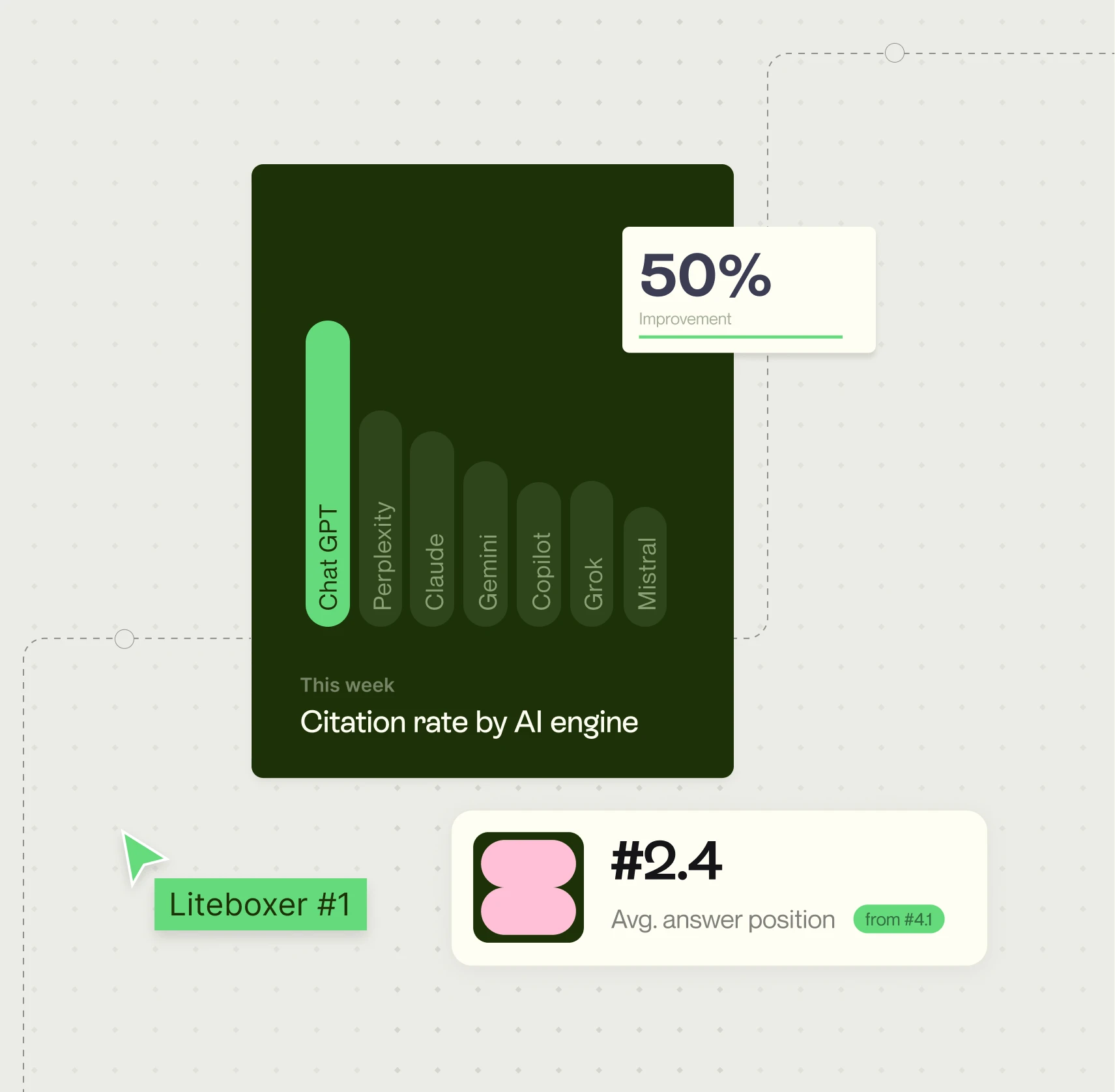
A citation snapshot checks whether a brand is used as a source in AI answers and, separately, whether it's actually named as the recommendation. A site can feed an answer for months without ever getting credit for it.
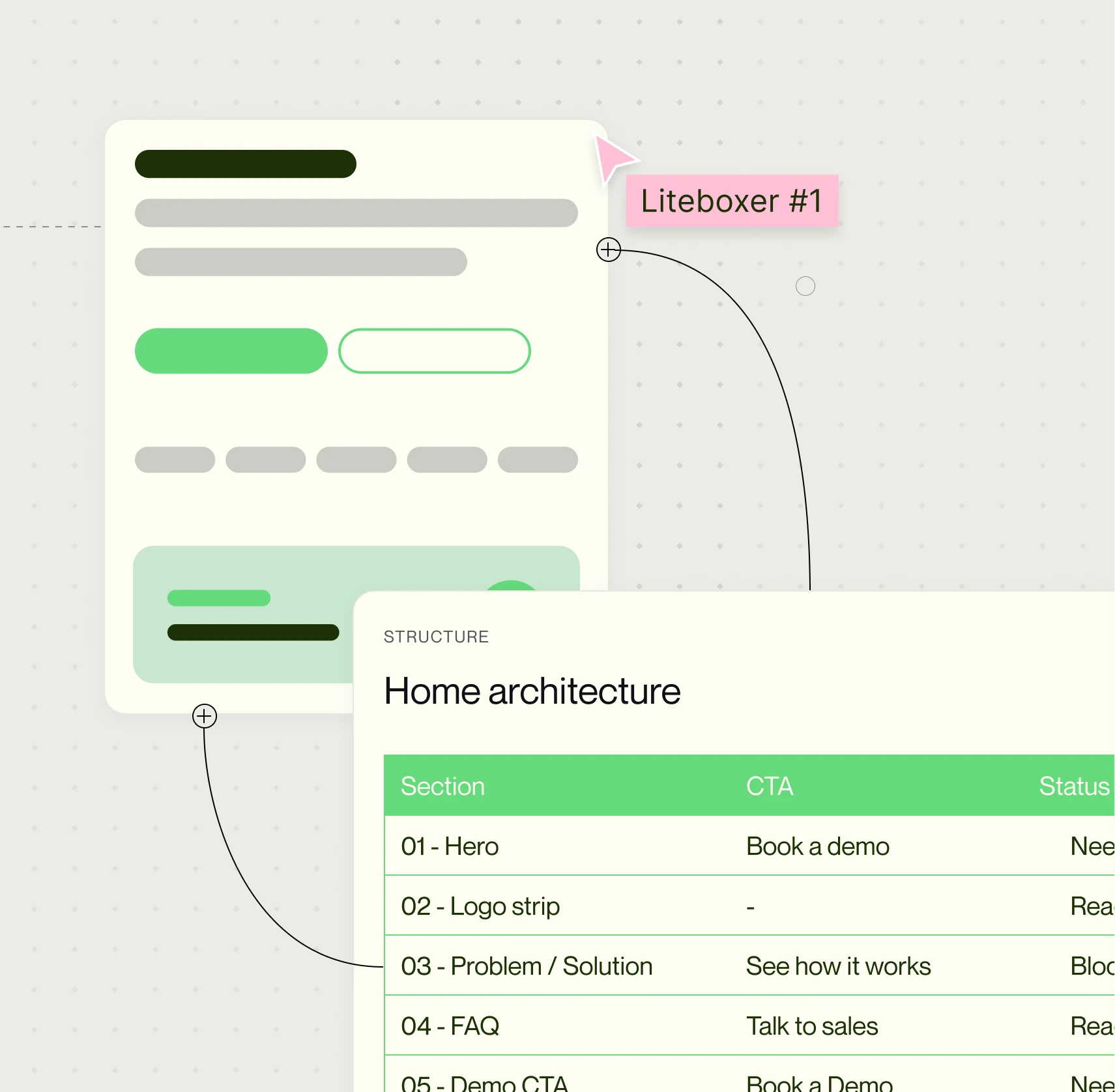
Page structure means writing every section so it stands alone: it names its subject and gives the answer first. It has to read correctly even if an AI engine lifts it out with nothing else on the page.
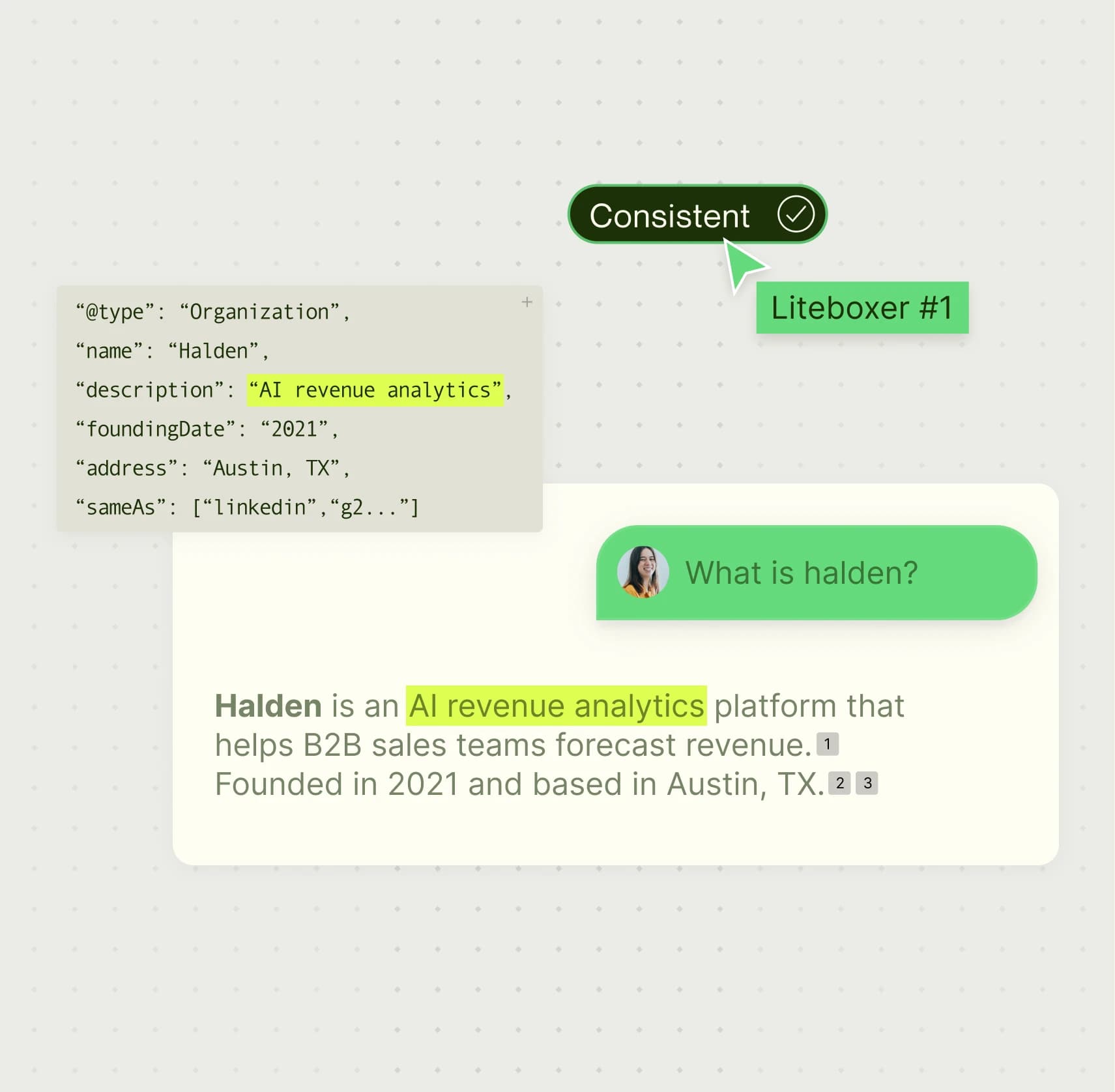
Entity consistency means an AI engine can tell a brand apart from anything else that shares its name. It's solved with one consistent identifier and the external profiles that back it up.
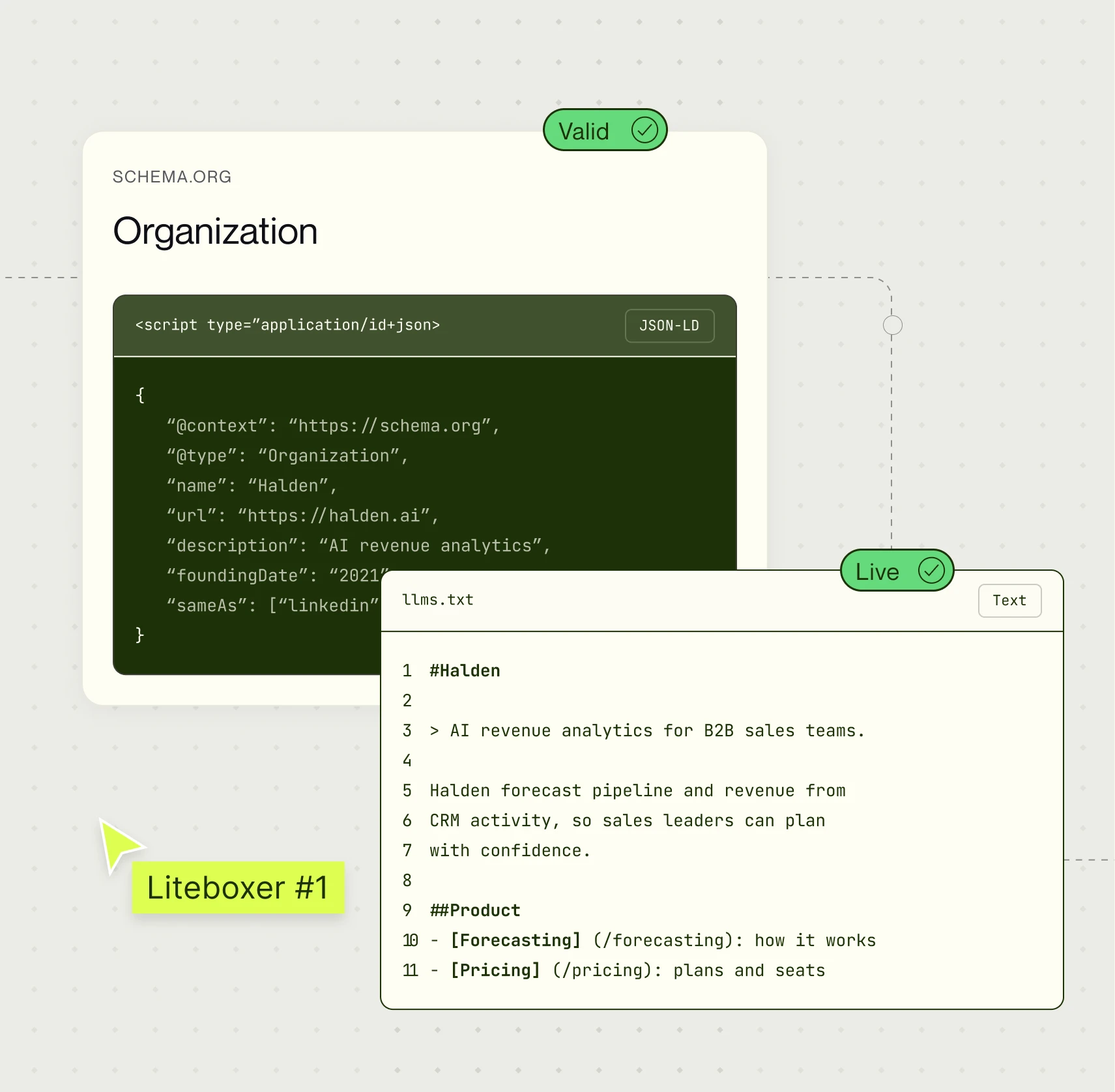
Schema implementation gives AI engines a machine-readable version of who a company is, what it sells, and who wrote what. It uses structured data like Organization, Service, and FAQPage markup that engines can read directly.
Continuous measurement tracks the same set of prompts across engines like ChatGPT and Perplexity on a fixed cadence, using tools like Profound, Semrush, Frase, and Gauge. That cadence turns citation gains or losses into a trend line over time.
Every engagement starts with a technical audit
Technical SEO audit services are the first deliverable and the entry point for the whole engagement: before any content or structural changes, we audit the site's current crawlability, entity signals, and existing citation rate, so the page structure, entity, and schema work that follow target what's actually broken instead of guessing. The audit stands on its own if that's all you need right now, and we start there for most engagements before scoping anything else.
Measurement runs on prompts and snapshots, tracked on a set schedule
Snapshots run on a fixed cadence, monthly or quarterly depending on what's scoped at kickoff, tracking a defined set of prompts across ChatGPT, Perplexity, and Google AI Overviews to see whether your brand or page gets cited. A citation counts specifically when the engine names your company or links to your page, the same bar an aeo agency should hold itself to when reporting results.
We measure this ourselves, starting with our own site
"0x." That's what crawlers read on our own stats module, until we fixed it.
On litebox.ai itself, the animated stats module rendered as "0x" to crawlers, because the numbers loaded client-side instead of server-side, a gap we found during an entity and rendering audit in August 2026 and have since been fixed. It's the exact failure this service exists to catch, found the same way this service finds it.


Three names for one company.
Before we locked the canonical description on August 6, 2026, litebox.ai described itself three different ways depending on where you looked: "agency" on the site, "go-to-market engineering team" in one part of the llms.txt file, and "high-tech startups" in another, exactly the entity-consistency gap this service exists to catch. It's proof the service catches what it promises, because we found it on our own site first.


4 of 9 prompts were measuring the wrong thing.
Reviewing Resolve's nine AI-visibility prompts against real demand in July 2026, we found four named the company inside the question itself, and one had returned zero citations for twelve months. Resolve's replacement set runs 24 prompts across 9 families, aimed at turning citations into named mentions.


AEO works best on a site that already converts
AEO gets more out of your site when it already has a clear brand, a fast experience, and a product story that's easy to follow: branding and websites set up that foundation, product design keeps the product story accurate, and the full growth program is where AEO sits alongside SEO, content, and experimentation as one connected system.